

Sauska Tokaj Winery
An Historic Wine Landscape in Hungary
Located within the UNESCO-protected Tokaj-Hegyalja wine region of Hungary, the Sauska Tokaj Winery by BORD Architectural Studio integrates contemporary design with a storied winemaking landscape. Its elevated, lens-like forms appear to float above the vineyards, establishing a strong visual presence while preserving a connection to the surrounding terrain. Beyond its sculptural presence, the winery reinforces Tokaj’s reputation as both a cultural and viticultural destination.
The region’s volcanic soils have supported viticulture for centuries. Villages developed along the valleys, and winemaking took place in cellars cut deep into rhyolite tuff. Since the early 2000s, renewed investment and tourism have brought a fresh wave of innovation. Today, architecture plays a role in this revival, with new facilities enhancing the visitor experience alongside wine production.
images © Hufton + Crow
Introduction to BORD’s Concept
The commission for the Sauska Tokaj Winery called for a modern facility centered on the production of dry white and sparkling wines, while also serving as a destination for hospitality and gastronomy. Positioned on the southern slopes of Padi Hill, the site offers sweeping views of significant settlements in the region, requiring a design that would engage with the landscape without overwhelming it.
BORD’s design reflects founding architect Péter Bordás’s philosophy of creating structures that feel both present and physically detached from their surroundings. His concept of the ‘untouched-untouchable’ informed the architectural massing — a floating form that engages the eye without disturbing the terrain.
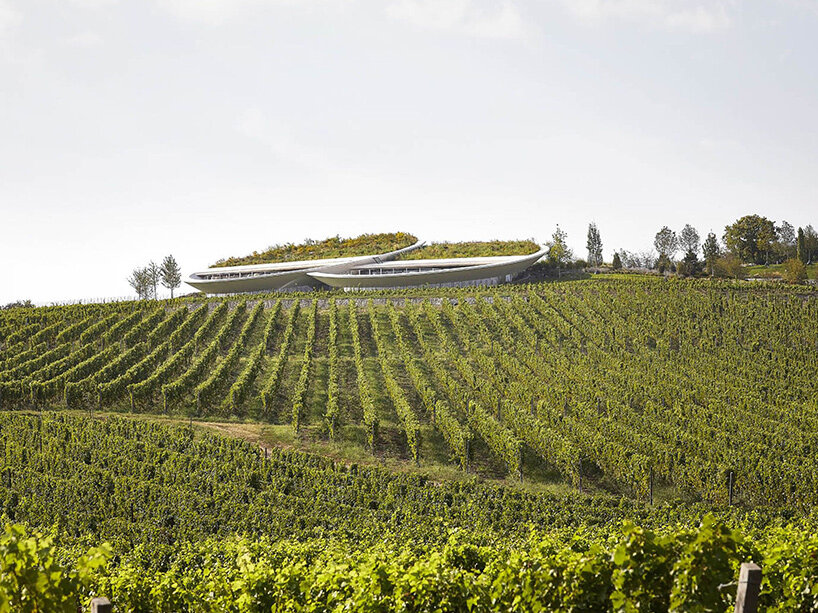
Sauska Tokaj Winery rises above the vineyards in Hungary’s UNESCO-listed Tokaj region
The Compositional Form of Sauska Tokaj
The visible portion of the winery consists of two intersecting, lens-shaped volumes, each 36 meters wide. Elevated above the ground and supported by slender steel columns, these house the visitor-facing functions: a restaurant, bar, and panoramic terrace. The functional spaces for fermentation and storage are located underground, where stable conditions are naturally maintained. The circular fermentation halls position stainless steel tanks concentrically around a central wooden barrel area, creating a clear spatial order.
The illusion of levitation is accentuated by the building’s overhangs and the way sunlight shifts across its underside. This floating character turns the structure into a landmark while allowing the surrounding vineyards to remain the primary visual focus.
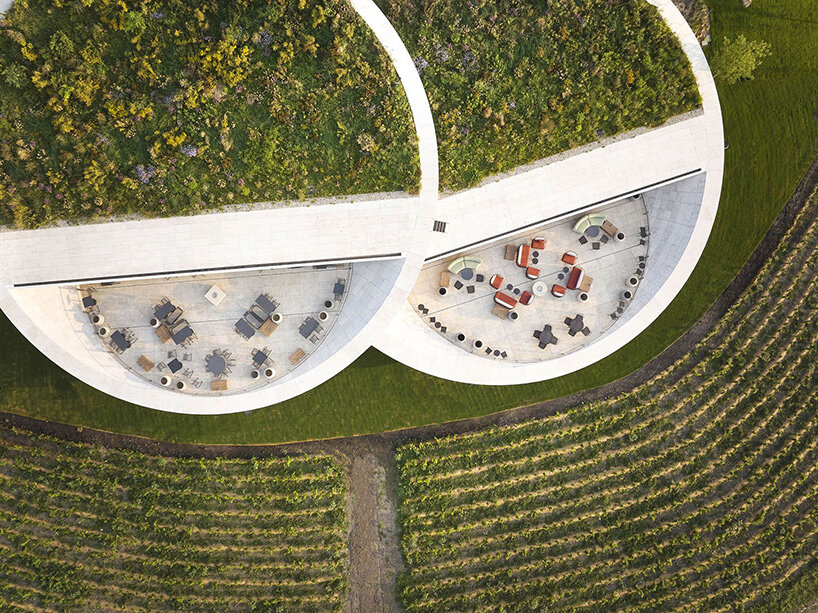
the winery’s lens-shaped forms appear to float over the slopes of Padi Hill
Visitor Experience and Interior Design
Visitors arrive via a path integrated into the slope, ensuring the architectural form is encountered in full view upon approach. The entrance is understated, leading into a compact lobby that opens to a skylit corridor and the main visitor spaces. Inside, curved ceilings frame the landscape beyond, narrowing toward the view and guiding attention outward. Stepping onto the terrace, guests are met with expansive views of Tokaj’s vineyards and hills.
Interiors, designed by Tihany Design, draw directly from the textures and tones of the wine region. Natural wood, local limestone, and steel details create a warm, tactile palette. This material approach anchors the contemporary architecture in the agricultural and geological context of Tokaj, while offering a refined backdrop for dining and tasting experiences.
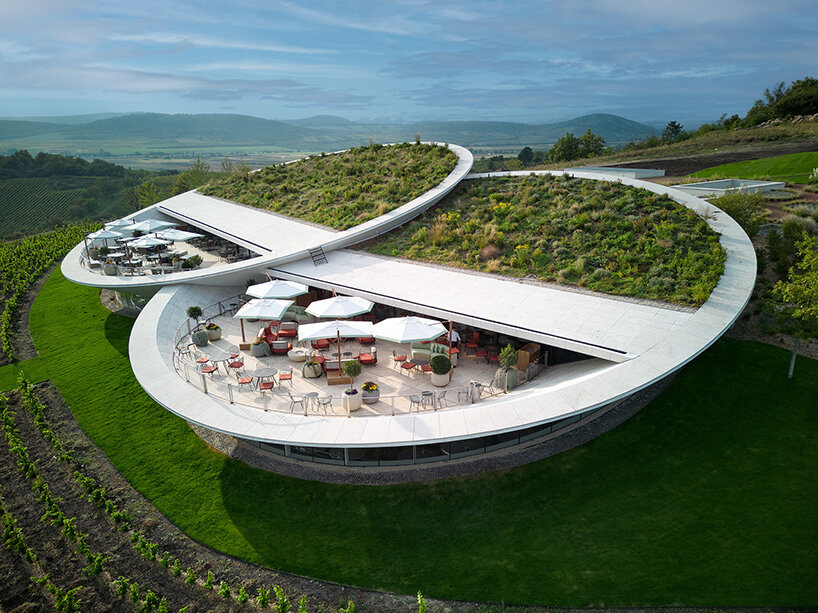
BORD Architectural Studio designs the building to integrate with the volcanic landscape
Operational Areas and Service Tunnels
Operational areas, including pressing, bottling, and labeling, are arranged in a linear sequence connected to the fermentation spaces. A service tunnel along the building’s axis facilitates movement of grapes and finished wine, while housing the necessary mechanical systems. The cellar’s cool, metallic surfaces contrast with the hospitality areas above, underscoring the dual identity of the building as both an industrial and cultural facility.
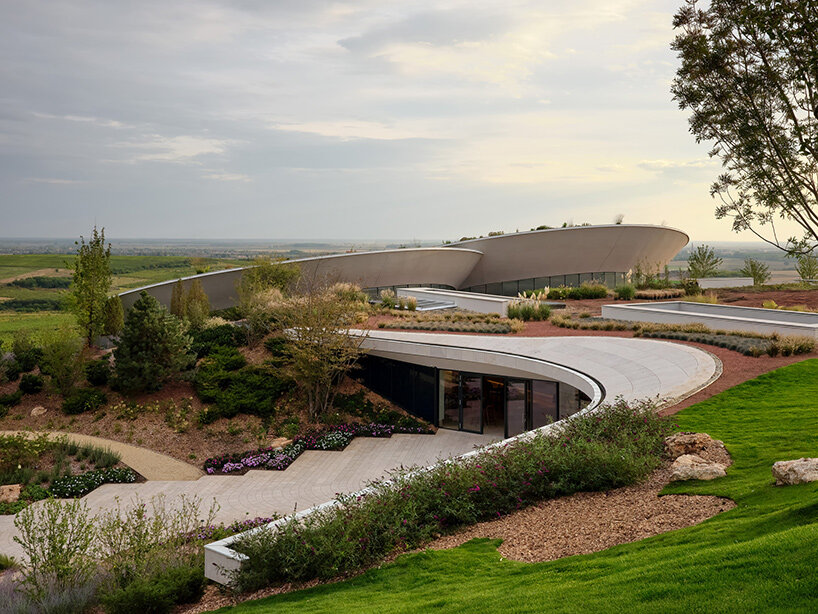
visitor spaces are elevated while wine production takes place underground
Conclusion
The Sauska Tokaj Winery is a testament to the successful integration of contemporary architecture into a historic wine landscape. By embracing the concept of the ‘untouched-untouchable’, BORD Architectural Studio has created a building that not only respects its surroundings but also enhances the visitor experience. The winery’s unique design, combined with its stunning location, solidifies Tokaj’s position as a premier cultural and viticultural destination


